
We celebrate the monsoon here in northern Arizona. Its storms bring gigantic bolts of lightning but also trickle down to the roots of humble plants. Among the most humble are mosses.
Many of my photographic heroes give us marvelous captures of lightning and forest mosses— one or the other, not usually both.
Lightning requires a wide-angle lens and a long exposure. Mosses require a macro lens positioned VERY close. Such a lens makes the individual moss structures a bit like a forest— the “seta” (the “trunk”) supporting tiny “capsules” full of spores.
Here is a shot— actually multiple exposures shot in “live composite,” which enables Olympus cameras a) to run and run and yet produce stills, not videos, and b) to produce images not washed out in light in ever lengthening exposure but capturing only CHANGES in light, like lightning or fireworks. (You might enjoy my blog series on Long Exposure, launching out from here.)

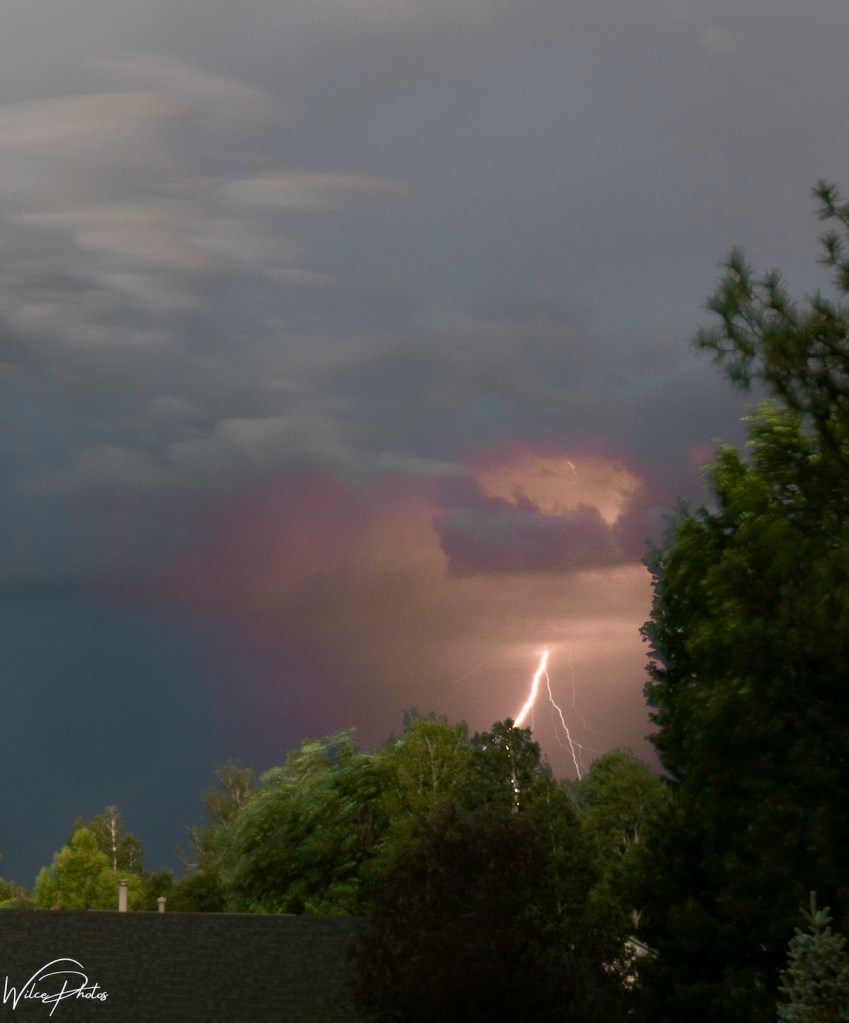

In our world where all too often might makes right, looking at the natural world around us gives us SOME counterexamples.
As for me, sometimes I feel like a naturalist more than a photographer. I have a healthy fear of getting hit by lightning, but delight in the quest to capture beautiful images of things great and small—the more they move, the better. It’s just that some creatures move slower than we can perceive.
For more information and pleasure, see these:
Lightning, Rainbows, and Sundogs
Blogs and other resources


Leave a Reply