
Why dead trees are the most alive places in the forest
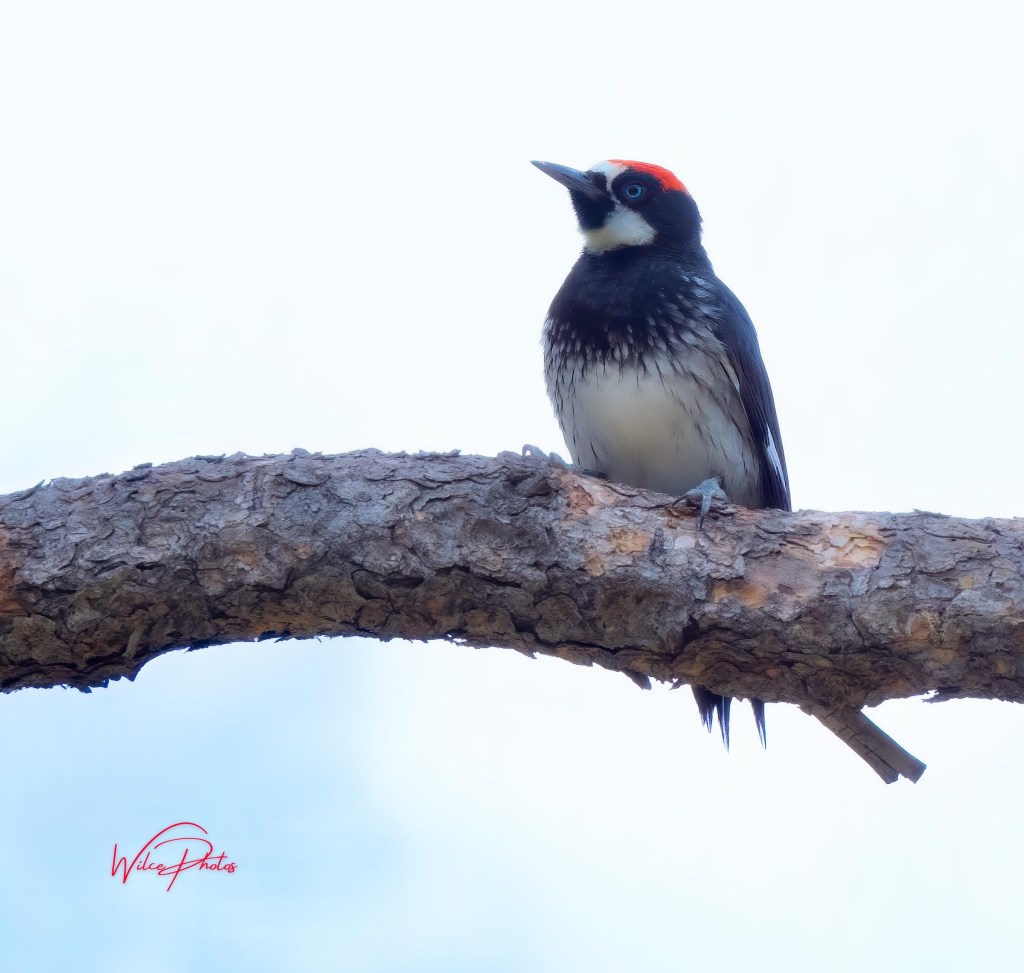
The Acorn Woodpecker (Melanerpes formicivorus) is one of North America’s very social birds — and one of its most dependent on dead trees.
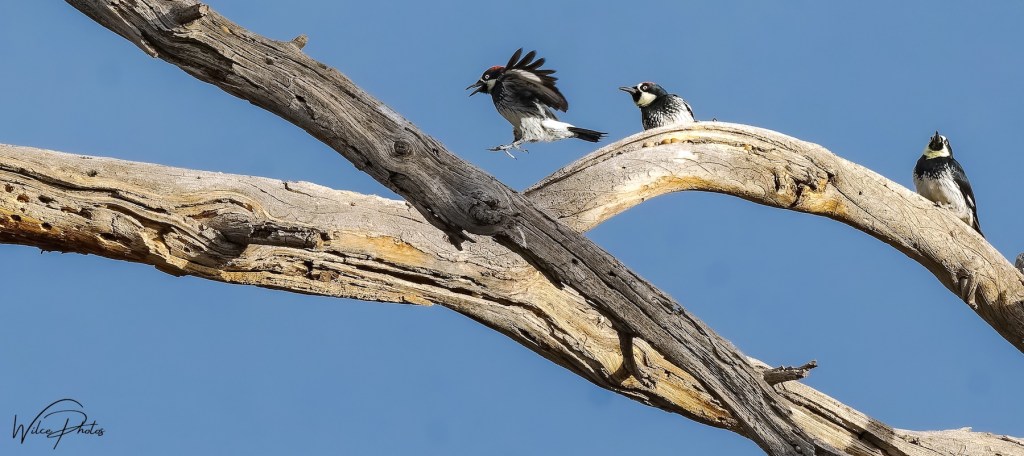
As I have watched them over the years, I see that they are never alone, never quiet, and never still. Five of them will land on a single dead tree and immediately start negotiating — who perches where, who gets which branch, who owns what.
Acorn Woodpeckers are the only bird I know that runs a communal pantry — and defends it like their lives depend on it.
But the snag isn’t just a convenient stop, or something to squabble over. For these birds it is also home and community center.
Their tree was a study in pox/pocks — holes so densely drilled they covered much of the naked old snag, 10 per square foot in some parts!
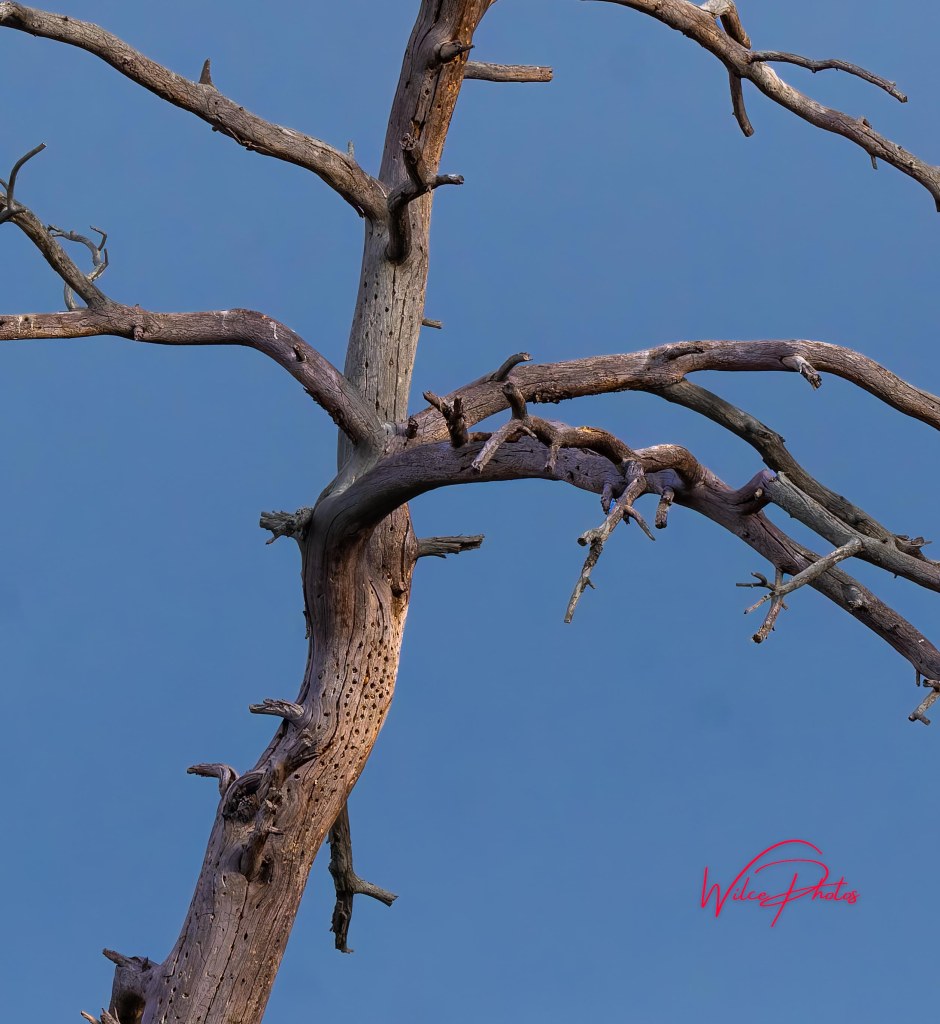
Now, about those holes… I thought I was imagining it — the way they seemed to be forcing the acorns in rather than just dropping them. But that’s exactly what they do. Acorn Woodpeckers size each hole to fit one acorn snugly, making it difficult for squirrels and other raiders to extract their hard-won stores. Zoom in. Those dark objects wedged into the holes — those are acorns!
Here is something– the acorns are wedged in tight enough that a thief can’t easily pull them out. The woodpeckers made these holes. They also patrol them obsessively.
But the snag gives them more than food storage. Dead wood harbors live insects — beetles, larvae, things moving just beneath the surface.
Whether the woodpeckers discovered the bugs while drilling their pantry holes or sought them out deliberately, I couldn’t say. What I watched was a bird that seemed to be doing both things at once — storing food for winter while eating lunch.
Where to go from here? How about to my blog post, “Hooked On Snags.” Or to my gallery “Snags And Their Allies” Or here, to buy a print of the hopping woodpecker, go directly to that image.


Leave a Reply